The Illusion of the Solitary Virtuoso
The conventional jazz piano trio often appears to place the pianist at the center of an obvious hierarchy. The piano states the harmony, carries the melody, and takes the principal improvisational spotlight, while bass and drums provide the foundation beneath it. In that model, the bassist walks through the changes and the drummer marks the pulse, valuable functions but frequently treated as supportive rather than conversational. The arrangement can be powerful, yet it risks reducing two highly responsive musicians to a background mechanism.
Bill Evans, Scott LaFaro, and Paul Motian challenged that assumption with an ensemble language in which every sound could alter the direction of the music. Evans did not simply play above a rhythm section. LaFaro and Motian answered, interrupted, shaded, and reframed his ideas, creating a form of spontaneous composition that behaved more like chamber music than conventional accompaniment. The historical importance of this approach is reflected in the Library of Congress documentation of the Complete Village Vanguard Recordings, which preserves the trio as a defining statement in modern acoustic jazz.
The Philosophy of Mutual Subordination
Mutual subordination does not mean that the musicians surrender individuality. It means that individuality serves the evolving sound of the ensemble. Each player listens for the musical event that is emerging rather than insisting on completing a private plan. The pulse is still present, but it is internal and elastic, shaped by breath, anticipation, delayed resolution, and the changing weight of each phrase.
Evans”s harmonic language made this possible. His voicings often suggested more than they declared, allowing notes to shimmer as color rather than function only as chord labels. Extended harmonies, carefully controlled dissonance, and subtle voice-leading created invitations for LaFaro and Motian. Instead of filling every available space, Evans could place a chord fragment in the lower register, let a treble note hang in the air, and leave room for the bass or drums to complete the thought.
This was also an ethical practice of listening. The pianist had to hear outwardly, resisting the habits that often develop through solo playing: constant activity, complete harmonic realization, and a desire to control the whole texture. Evans”s career established a distinct artistic voice within this tradition, a development traced in Encyclopaedia Britannica”s portrait of the pianist.
- Hear the lead line before deciding whether to answer it.
- Use harmony selectively, emphasizing important tensions rather than every chord symbol.
- Change density, register, touch, and dynamics deliberately.
- Allow silence to function as an active musical element.
- Make a transition from accompaniment to solo unmistakable through shape and energy.
For the practicing musician, the central lesson is practical. Before adding a phrase, identify what the ensemble lacks. If the melody needs warmth, supply color. If the time feels uncertain, clarify the pulse without becoming rigid. If the texture is already complete, restraint may be the most expressive contribution available.
Scott LaFaro and the Emancipation of the Bass
Scott LaFaro expanded the bass from a repetitive timekeeping role into a melodic and structural voice. Rather than walking four quarter notes through every measure, he could move into the upper register, outline intervals, sustain a lyrical idea, or respond directly to an Evans voicing. His lines did not merely explain the harmony. They often created a second melody with its own direction, tension, and memory.
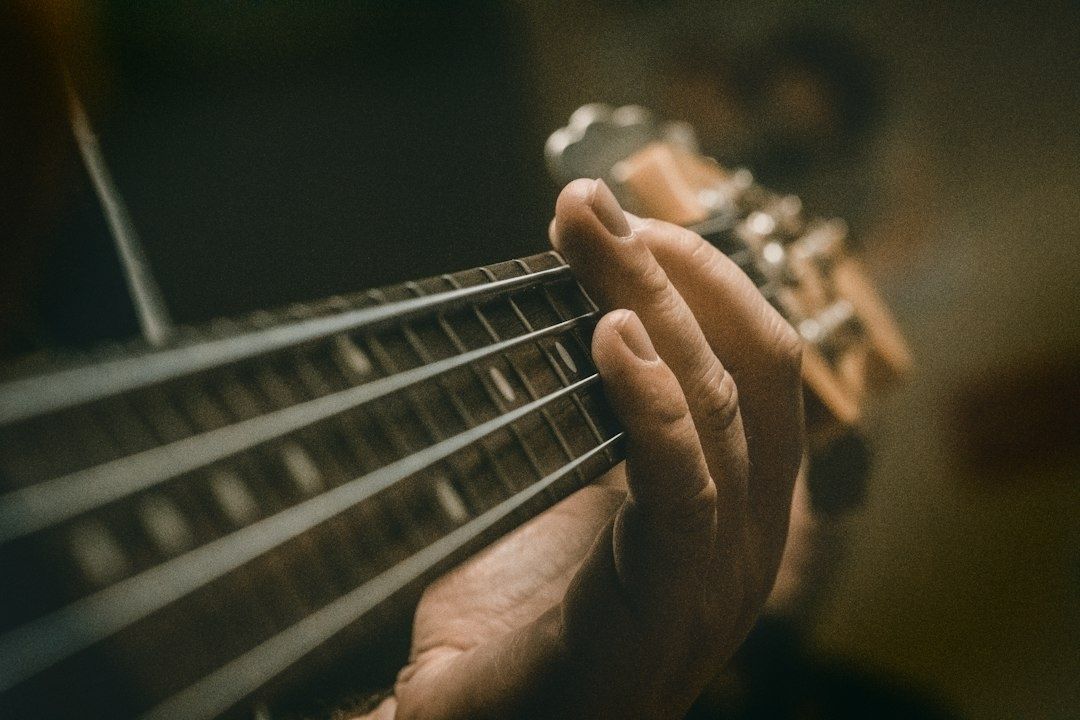
The distinction is clearest when comparing a conventional walking pattern with LaFaro”s conversational counterpoint. A walking bassist generally makes the beat continuously legible and connects one harmony to the next. LaFaro could leave that continuity implied while using space and intervallic design to converse with the piano. A descending figure might answer a rising chord fragment, or a sustained note might suspend the harmonic motion while Motian supplied a delicate pulse beneath it.
| Traditional walking function | Conversational counterpoint |
|---|---|
| Maintains a continuous quarter-note pulse | Uses varied note lengths, space, and rhythmic displacement |
| Primarily outlines roots and chord movement | Develops independent melodic and intervallic ideas |
| Supports the pianist”s harmonic statement | Responds to, redirects, and sometimes contradicts it |
| Prioritizes continuity | Balances continuity with interruption and surprise |
LaFaro”s independence did not weaken the rhythm. It made the rhythm more sensitive because the pulse was distributed across three imaginations rather than assigned to one instrument. His bass could imply forward motion through the contour of a phrase, while Motian suggested meter through cymbal color or a displaced accent. The result was not a loss of time but a deeper, less literal experience of it.
Study this approach by limiting the left hand to sparse voicings and listening to the bassist”s complete line. Do not judge the bass only by whether it marks each beat. Follow its register, intervals, rests, and relationship to the piano”s inner voices. A bassist can practice by singing a counterline before playing it, then testing whether the line remains audible and meaningful when the piano becomes more active.
Paul Motian and the Architecture of Silence
Paul Motian treated the drum kit as a field of timbre rather than a machine for marking regular subdivisions. His ride cymbal could suggest time without spelling out every beat, and his brushes could create a soft grain around the ensemble instead of a uniform carpet beneath it. Accents appeared as comments, sometimes arriving after the expected moment, sometimes dissolving before they became fully defined.
This approach required exceptional confidence. A drummer who leaves space risks being perceived as inactive by listeners trained to expect continuous propulsion. Motian”s silences were not absences of technique. They were decisions about decay, emphasis, and perspective. A cymbal stroke might continue to resonate while the hands stop moving, allowing the sound itself to occupy the measure.
His musical identity developed through a complex relationship with tradition and experimentation. Accounts of Motian”s work emphasize his connection to earlier jazz drummers as well as his later use of rubato, discontinuity, and free tempo. In the Evans trio, those qualities became a form of architectural listening, making the boundaries between pulse, color, and silence unusually fluid.
- Listen to the length of a cymbal”s decay, not only to the moment of attack.
- Notice when brushes define texture rather than beat.
- Track how an isolated accent changes the meaning of the surrounding silence.
- Practice stopping without allowing the internal pulse to stop.
- Let dynamics fall away naturally instead of closing every phrase with a hard punctuation mark.
For ensemble musicians, Motian”s example offers a demanding form of vulnerability. When one player leaves space, the others must listen closely enough to sustain the music without immediately filling the opening. The drummer”s silence can expose the pianist”s touch, the bassist”s articulation, and the group”s shared sense of time. That exposure is precisely where trust becomes audible.
A Critical Listening Guide to the Village Vanguard Sessions
The June 25, 1961 performances at the Village Vanguard are essential listening because the trio”s philosophy is audible in minute detail. The recordings preserve the atmosphere of the room, including audience sounds and the physical presence of the club. Those details matter. They place the music inside a living social space rather than presenting it as an abstract studio object. The sessions remain central to the jazz canon, as shown by the Library of Congress cataloging of the landmark recordings.
Begin with “Gloria”s Step.” Listen for how the opening establishes identity without explaining every possibility. Evans”s chords, LaFaro”s movement, and Motian”s light punctuation create a shared surface in which no instrument functions as a mere shadow. Then turn to “My Man”s Gone Now,” where weight and spaciousness become central. The performance demonstrates how a melody can remain emotionally present even when the arrangement becomes harmonically open and rhythmically elastic.
- First pass Listen without analysis. Mark the moments when attention shifts from one musician to another.
- Second pass Follow the bass alone. Notice when LaFaro states a complete idea, answers the piano, or leaves a phrase unfinished.
- Third pass Focus on Motian. Identify cymbal resonance, brush texture, displaced accents, and deliberate non-events.
- Fourth pass Return to the piano. Separate melody, inner voice, bass-register support, and harmonic color.
- Final pass Map the handoffs. Write down which instrument initiates a change and which instrument confirms or redirects it.
“Jade Visions” is particularly valuable for studying tenderness without sentimentality. The performance does not depend on constant intensity. Its emotional force emerges through balance, patience, and the careful proportion of sound to silence. Listen for rhythmic elasticity that never becomes careless. The beat may bend, but the trio”s attention does not.
To bring this listening method into practice, rehearse a familiar standard with one rule: no musician may fill a space simply because it exists. The pianist can omit a chord, the bassist can sustain a note instead of walking, and the drummer can allow a phrase to decay. Afterward, discuss where the music became clearer and where it became vague. Such exercises develop active listening more effectively than adding complexity for its own sake.
Carrying the Art of True Listening into Modern Practice
The Bill Evans Trio”s enduring lesson is not a collection of voicings, bass patterns, or drum techniques. It is a discipline of attention. In rehearsal, learn the melody deeply enough to recognize when it is being transformed. Practice dynamic changes at deliberately low volume. Trade short phrases while preserving silence between them. Record the ensemble, then listen for moments when a player answered the music and moments when a player merely continued playing.
Musical deference does not diminish personal expression. It sharpens it. A pianist who can leave space makes each chosen note more consequential. A bassist who can imply time without stating every beat gains melodic freedom. A drummer who understands decay can shape an entire section with one cymbal stroke and the decision not to follow it immediately.
The trio”s mandate remains direct and demanding: performance becomes living dialogue when every musician accepts responsibility for the whole sound. Develop technique, but place technique beneath awareness. Protect the pulse, but do not imprison it. State ideas clearly, then release them before ownership becomes control. In that balance between presence and restraint, the piano trio becomes more than accompaniment. It becomes a shared act of discovery.